





Paul Zadro has spent 55 years in martial arts and built 8 full-time IMC centers across Australia. As former president of ISKA for 34 years and operator of the oldest continuously running martial arts school in Australia, Paul shares the business lessons, mistakes, and mentorship that shaped his journey from a 15-year-old teaching at a community center to leading one of Australia's most respected martial arts organizations.
IN THIS EPISODE:
- How Paul Zadro built 8 full-time martial arts centers across Australia over 55 years — and why he started teaching at just 15 years old
- The licensing model IMC uses to scale (and why Paul avoids the word “franchise”)
- Why your black belts will force you to get serious about the business side — or risk losing them
- Paul's #1 management lesson from Ed Parker
- The truth every martial arts school owner needs to accept
- And more
*Bring 50 Enrollments Into Your Martial Arts School Every 90 Days Need help growing your martial arts school? Watch Training + Take The Assessment
TRANSCRIPTION
GEORGE: Hey, it's George Fourie. Welcome to another Martial Arts Media business podcast. Today I'm with Paul Zadro from IMC Australia, and also ISKA Australia. How you doing, Paul?
PAUL: I'm doing great, George. I'm happy to talk to you today. We've been trying to do this for quite a long time.
GEORGE: It's great. I've got to tell you, it's always easier to do research on guests, obviously when they're a legend in your status, but also when you search and, oh, hang on, their Wikipedia page comes up. So that takes all the insight out.
PAUL: Yeah. Look, I wasn't the one who put that up, but, you know, it probably needs refreshing. It's been there for a while now.
GEORGE: Thanks again for jumping on. And wanted to chat about a few things. We've had a few guests that say, “Hey, you should really talk to Paul.” One would be Robbie, so shout out to Robbie, who just hosted the Level Up event, and had the opportunity to hear you talk just about your experience, and there's things that I'd love to dive into a bit deeper. For guests that haven't met you, who is Paul Zadro?
PAUL: Well, I've been doing martial arts now for 55 years. We have eight full-time IMC centers around Western Sydney, one up on the Gold Coast, and planning on more to come in the future. I was the president of ISKA for 34 years. I've since handed that off. The IMC center at Kemps Creek is the oldest continuously run martial arts school in Australia.
GEORGE: Very cool. That's it in a nutshell. So 55 years, long time in martial arts. I'd like to unpack a few. We can look at the highlights, but also obstacles and where challenges came up, that others can learn from that. But take us back just a few steps. Where did the whole journey begin for you?
PAUL: Well, my family were big time into soccer when I was a little kid. In fact, my father was the president of the Queensland Soccer Federation. And my grandfather was one of the founding members of the Marconi Club. They weren't too happy when I decided I was going to do martial arts, but once I saw Enter the Dragon as a seven or eight-year-old, that was it for me, you know?
That was where I started. I got into — well, the only thing around in those days was judo, and then from judo to taekwondo, taekwondo to kenpo. And then kenpo led me on a journey and I got over to the States. I was fighting at Long Beach on the circuit. I met a lot of other guys, went to Thailand, got into Muay Thai.
I went to John Will's very early seminars that he was holding in Sydney for Larry Papadopoulos. Got me into Brazilian jiu-jitsu. And of course, MMA just evolved after that. It's been a long journey, a lot of evolution along the way, but I wouldn't have done anything else.
GEORGE: What made you decide, “Well, hang on. I'm training, I'm doing these fights.” At what point did you turn that into your first martial arts school?
PAUL: When I was younger, probably about 15 at the time, or 16 at the time, I was doing kenpo at the Marconi Club, and that school was closing down. The instructor was going off to do something else, and one of the parents of one of the more junior kids said, “Oh look, we've got a community center at Kemps Creek. If you keep teaching my kids, I'll pick you up, take you to training, and you keep teaching the four or five juniors” that I was teaching at the time, and one of them's still with me 48 years later.
And that's kind of how the school at grassroots began. I didn't realize that it was right next to the Rebels clubhouse, but there were some interesting days too.
GEORGE: What insights or challenges did that bring about?
PAUL: Really at the time, if you taught martial arts, you taught it for love. I mean, nobody thought that you could make any kind of a living out of it. But then I started to get a few bills from the federations that I was part of, so we started to charge a little money and just over time, I realized that, you know what, you can make a pretty good business out of this.
But my passion has always just been teaching. Financial success is just — I think if you love what you do, it's easier to be good at it, and it's easier to be successful at it. But I had some good mentors along the way as well.
GEORGE: And so if you're talking about mentors, was this martial arts, business, or both?
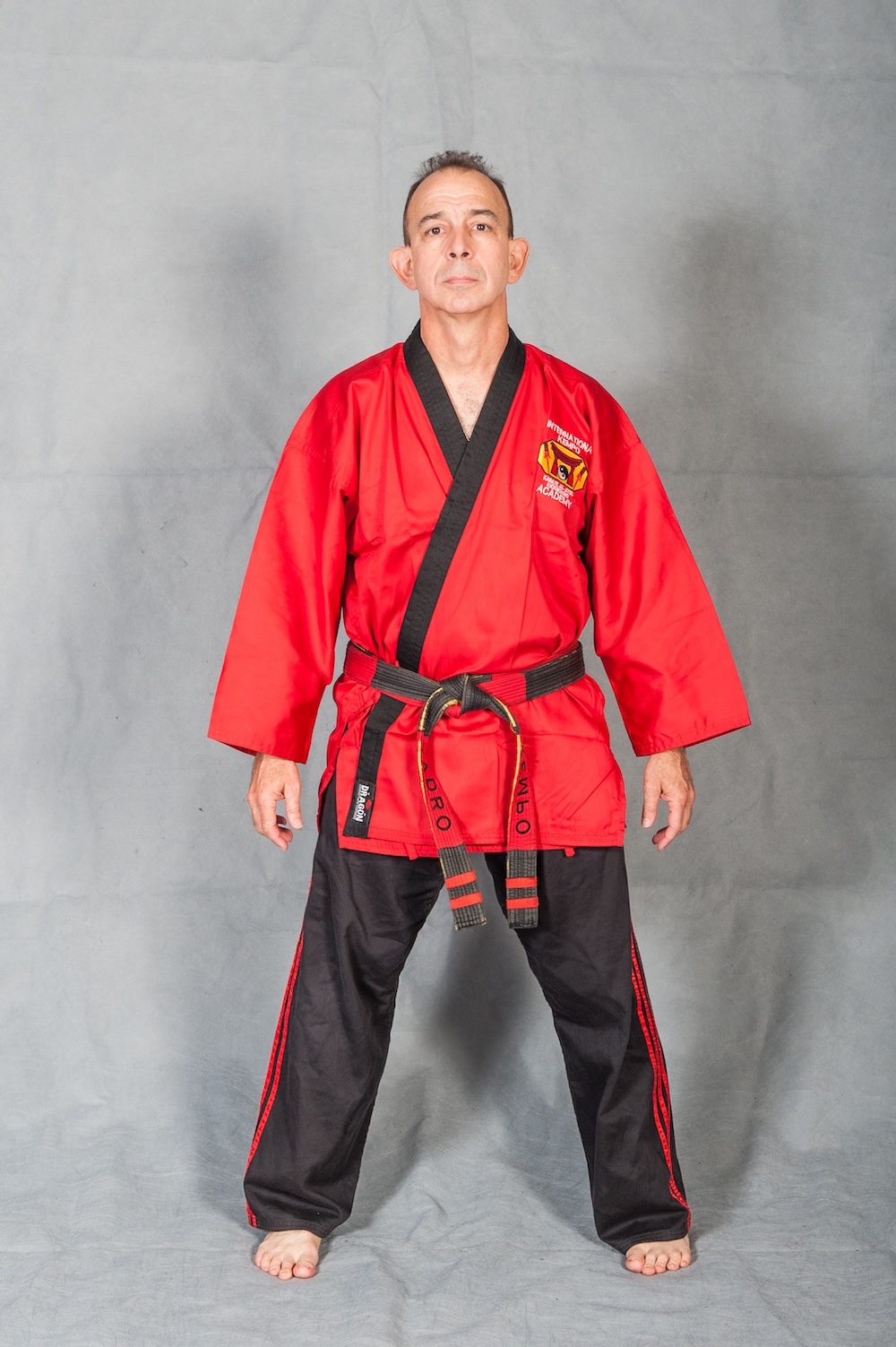
PAUL: Well, both. I mean, my father was a pretty successful businessman in his day. Owned a lot of pubs. He managed a soccer federation as well, so he knew people and he knew business, so I had a good mentor in him. But I was traveling the United States when I was in my early 20s, and I was looking at what they were doing over there with their schools, particularly Ed Parker.
I got to meet Parker several times. He used to call me Skippy. He had a whole lot of names for me. I watched what he did with his schools and at the time, in the mid '80s, he was kind of really ahead of the game. He was quite a smart guy.
And then when the tournaments were over, I traveled around Los Angeles and the rest of the United States and started to see what was possible in the martial arts industry, and then it started to evolve more into a business after that. And then joined EFC, of course, and started to go to their seminars in the late '80s and early '90s. And everything just evolved from there.
Like everything, there's been a lot of changes in martial arts, both in terms of what's taught and in terms of the business model for it as well. But if you haven't got both of them down, your school's not going to be successful. You've got to teach quality and you've got to manage intelligently as well.
GEORGE: So you mentioned changes. What are those changes that are popping up?
PAUL: You mean from a business perspective or from a technical martial arts perspective?
GEORGE: I guess a bit of both. Like, we had a call with a partners group today. Your friend Lindsay actually brought this up.
PAUL: Oh, yeah. Lindsay.
GEORGE: We're talking about the changes in just human behavior, parenting styles and so forth, and how you have to adapt to how you speak to both your students but also the parents, and making sure the parents are actually enforcing discipline if that's a thing that you focus on in the martial arts.
PAUL: Yeah, definitely the way you adapt to your students is very different, too. I mean, in the early '80s, a car would slow down in the driveway and a father would push a 10-year-old out the side door, and I'd probably meet that man when that kid was getting his black belt as an adult.
Now, parents are very much engaged and indulgent of what their kids are doing. They're here all the time. They're at every training session. So it's not just that you're educating your students if we're talking about children. You're trying to educate the parents at the same time as to what their expectations should be in the martial arts. If you don't try and understand what parents are trying to get for their children — well, there's a lot of competition out there as well.
Did I answer your question?
GEORGE: I think so, yes. Was there something else that you were seeing? Like, when you mentioned going from the '80s and how things are different now, what are the changes beyond that?
PAUL: Kids in the early days, in the '80s, were different. They were more independent. Of course, there was no social media and all of the demons that brings with it. But they were more athletic. They were more adventurous as well. They weren't as, I don't want to say protected, but indulged as they are now.
So it was easier to teach them. It was easier to be harder with them, and their expectation was, if I'm going to do karate or kickboxing or something like that, there's going to be strict discipline and I'm going to be required to do better every class. While that's always the case, now the way that you apply that is very different. Because it's a very woke society, so you've got to speak a bit softer and you've got to encourage all the time. And that works just as well. It's just evolution.
GEORGE: 100%. So if you had to flip to the positive of the changes, what is the big opportunity that you're seeing in the space right now? And especially for you guys — eighth center, keep growing. There's clearly a market for martial arts and you've clearly shaped a model that works for you on the business front.
PAUL: Look, it's easy now to get exposure. It's much easier to let people know that you exist and where you exist and what your services are and how they can find you. I know you offer a great service and some of my clubs are coming on board with you.
Whereas in the old days, prior to the internet, it was either flyers or Yellow Pages or you went to school fetes and demonstrations. The exposure that martial arts got back then was just minuscule compared to what we're capable of doing now with the internet and with social media. And certainly, the movies are a big thing as well because there's no action hero who doesn't do martial arts. Everybody's either doing jiu-jitsu now in the movies or they're doing Muay Thai. It's impossible to go through life and not hear some type of martial arts. And with the UFC, of course.
But one of the downsides of the full-on reality martial arts is that just because people like watching them doesn't necessarily mean they want to do them. So if you take a good example of that — when Muhammad Ali fought Joe Frazier, 200 million people logged in to watch the fight on TV. But the boxing gyms around the world never saw any real increase in the number of people that were training.
GEORGE: Interesting.
PAUL: So traditional martial arts is always going to be a core center of any successful martial arts system, and then you've got all the reality stuff after that.
GEORGE: So if we go back here quickly, because you mentioned you started training, you opened the first school. At what stage did you decide, “Well, hang on, this is a business and I need to expand and open a second one”?
PAUL: Well, the thing that makes you really concentrate on the business of a martial arts school is your black belts coming up behind you and pushing you. So they're all reaching a point where they may be at the end of their fighting career or they've got their black belts and they're saying, “Well, what's next?”
Well, sure, you can continue training, but what does every black belt want really? They want their own students and their own club. So when I saw the writing on the wall that I need to provide a career path for people where they could, like me, continue doing something they loved, that forced me to get better at the business side of this.
And I think I've been pretty successful, but I've been successful because I've failed in so many different ways that what's left has got to be the right move.
GEORGE: That's kind of one way of looking at it. 100%. Finding all the wrong ways to do it.
PAUL: But I will say this. As IMC has expanded into more and more schools, it's given me access to more and more people with more and more skills. So it's kind of an arithmetic progression. Where it's really hard to find someone who could do your social media for you, now there's dozens of people, some of them within our own system, that can do that sort of stuff.
Or if you want to deck out a new school, it used to take three months, but now it's just phone numbers in our phone. This guy does the sign, this guy does this, this guy does that, these people do this, and you can basically plan it all out in a couple of days. So there's an economy of scale here. The bigger you get, the easier it is to grow.
One of my old jiu-jitsu instructors used to have a saying. He used to say, if you run a martial arts school, you could probably build a space shuttle, because there'd be somebody in your school who'd know how to do it.
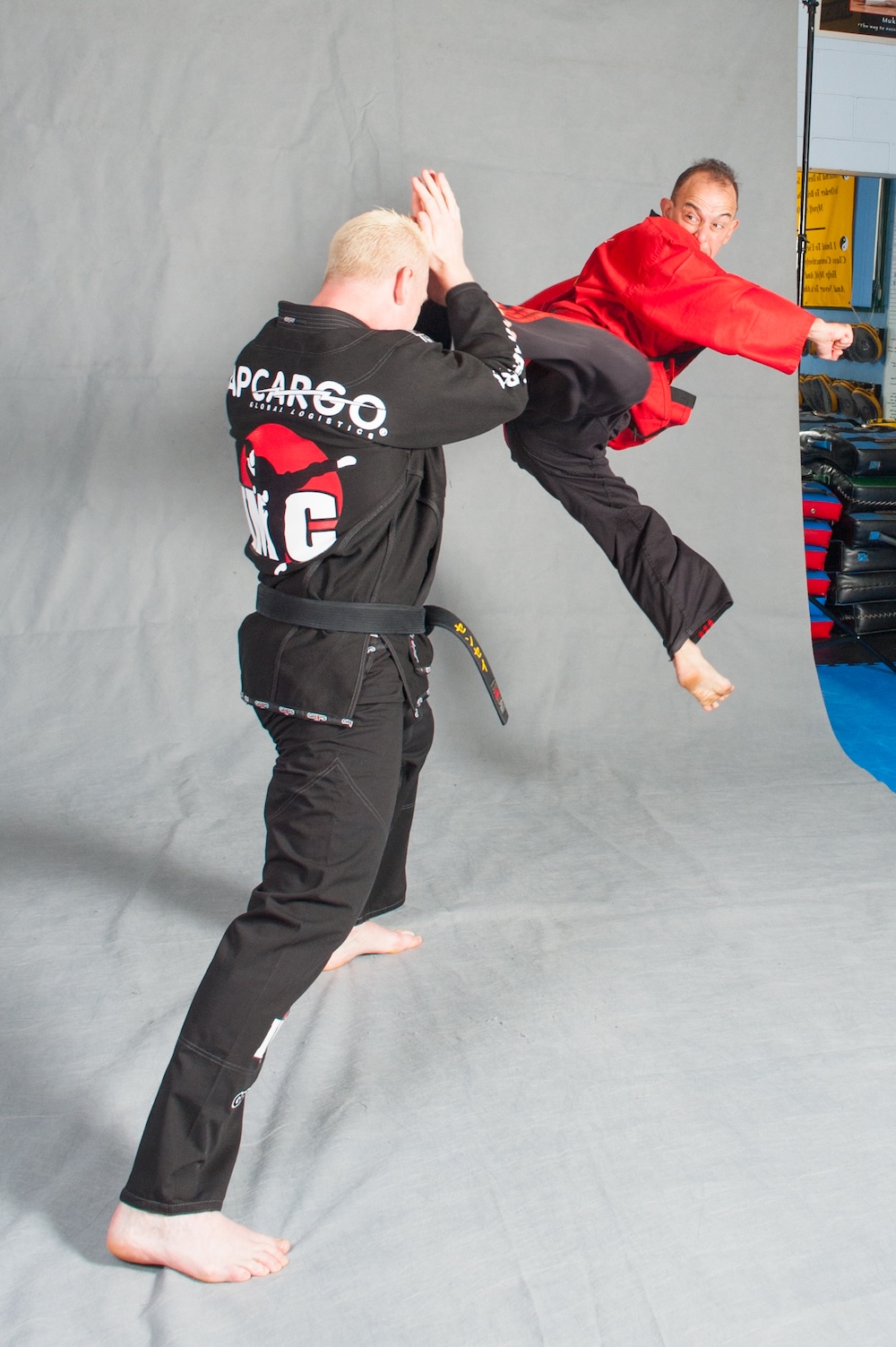
GEORGE: Very cool. So for you then, how did you go about defining the structure and how you were going to scale the school? What is the structure like? Have you got a franchise model? Is there co-ownership or ownership, or how does that work?
PAUL: We have a couple of different models. First of all, we generally only grow our school from within our school, so they have to be people that have grown up here and understand the most important thing, which is the culture of IMC. If they understand the culture, they're going to listen to the people that are giving them advice.
So the structure — there's two structures. There's one that's a license, a paid license, and there's guys like Robbie who've been with me since they were five years old, and they get a bit of a grandfathered deal. And he's creating his own sub-schools under him at the moment.
GEORGE: Yeah, so that's licensing, and then what are the other models?
PAUL: Well, I don't like the word franchise because franchise has a whole lot of legal ramifications that go with it. So their failure, you could be liable for that. So I think license is a better way of putting it. And some licenses, they'll pay a monthly or annual licensing fee to use the name. Others that have been with me for 30, 40 years, they get a bit of a sweetheart deal.
There's a contract which basically says you won't do several different things to bring the school into disrepute, but there's not a financial commitment, other than they buy equipment from us. My IMC Martial Arts Supplies, which is formed just to supply all of our clubs.
But I don't recommend to anybody that they start bringing in copious amounts of martial arts equipment from overseas because you'll end up in a cash flow crisis. You make money by selling products, not by stocking them.
GEORGE: So with the structure and with the licensing, what do you do for brand control? Do you have strict brand guidelines of how you go about marketing?
PAUL: Yeah, it's in the contract. If you bring the brand into disrepute in any way, then I can withdraw the brand from you. But I've never had a case where I've actually done it. We tend to sort out our problems quite reasonably.
GEORGE: That's on the mats or in conversation?
PAUL: Yeah, there's a bit of that. Or both. We are a martial arts school. You won't get an IMC school unless you're intelligent, a reasonable person, a certain amount of acumen, and of course, you've got to be a great martial artist. So before I'll give you the nod to open another IMC school, you've got to be the right sort of person right from the beginning. And I often say no, because all it does is create untold problems for myself and my head instructors. But to date, it's all been very smooth running.
GEORGE: And the success definitely communicates that. Now, if I look at all the IMC schools, they're all schools with significant student numbers. What is it that you feel gives you the edge? What is it that you do different or how you approach the business that has that high level of retention?
PAUL: Look, it might seem a little bit arrogant, but I have a saying that I tell my guys. There's no idea that you're going to come up with that I haven't thought of in the last 55 years, and I've either done good with it or done bad with it. So before you go rushing off to do it, why don't you ask me my opinion?
So I try to give them the right advice because it's so easy to make mistakes, particularly in martial arts. And they can end your club. A simple thing can be catastrophic.
I remember when I was the head of ISKA, I think at one stage we had about 1,300 clubs on the ISKA database that were participating in the tournament circuit, and we were doing mail outs in those days because the internet wasn't really the main source back then. But every time we mailed out, 30% of those clubs would come back “not at this address anymore.”
So there's not a lot of ways to be successful running a martial arts school, and there's a whole lot of ways to fail. And if you've got someone that can give you a mentor to give you advice, I'd recommend everybody find a mentor, find a success coach, and listen to what they have to say. And you'll avoid some of the pitfalls. There's certainly plenty of them.
GEORGE: 100%. I think it's the only shortcut in business — getting knowledge or insight from someone that walked the path you want to walk, and they can point out the mistakes that they made and just say, “Don't do that.”
PAUL: Yeah, well, after a time, they're not going to listen anyway, but at least you can say, “Hey, if you do that, this is going to be the result.”
GEORGE: Yeah, because you're a hard-headed martial artist, entrepreneur, you still have to learn, you still have to prove yourself wrong, right?
PAUL: Well, at this stage of my evolution, where I am right now, it's about all my students. I really love teaching, and I try to teach two to three classes a night, pushup for pushup, and my instructors — making sure they're set up so their clubs are going to be successful moving forward. So my focus right now, I mean, I'm sort of heading to my mid-60s now, so my focus now is just my students and my instructors. That's where I want to be at this stage.
GEORGE: For others to learn from a few mistakes, was there ever a time, if you can maybe highlight a real crucial mistake that you faced and overcame, or that you maybe reached a point where you just wanted to burn it down?
PAUL: There's a few of them. But you know what? I could write a book on the mistakes that I've made in the martial arts.
GEORGE: You should.
PAUL: Well, you know, I'm Italian, so the guilty have to be protected. Look, one of my earliest mistakes was not providing a career path for my most talented people, and that was a long time ago. The second thing was not encouraging my key people to take care of their financial future. For example, superannuation or assets, or just understanding that one day you're going to get old and you're not going to be able to kick and punch and do this stuff, and you should focus on that level of preparation. And certainly get some good advice on that because that day does come for everybody.
What else? The way I handle my students now is a lot more — I realize that in martial arts one thing's really important. Do less.
GEORGE: Do less?
PAUL: So when you think there's a problem and you've got to immediately jump in and handle it, just doing a little bit less than you think you should is always a better approach.
GEORGE: Give me an example on that.
PAUL: Look, say you've got someone who's not listening to your advice from a brand perspective, and the first reaction of most martial arts instructors is to jump down their throat. But if you just give them a little bit of space, they usually come to the epiphany themselves that they're going in the wrong direction. It's all too often that heads of styles overreact to some of the small things. And I got that advice from Ed Parker himself. He said, “Do less.”
GEORGE: So it's almost more like instead of over-coaching —
PAUL: I'm talking about from a management perspective here. If you're coaching your students on the floor, well, there's no such thing as too much coaching. I get out on the floor for hours at a time and sometimes my staff have to go, “Relax, Paul. Give him another week before he's ready for the world championships.”
GEORGE: I was sort of referring to your team.
PAUL: Yeah. So initially, if you've got a big team of instructors, don't overreact to everything that they're doing. A lot of times they'll reach the epiphany that they're on the wrong path, and they'll come back into the fold. Doing too much with a big team can often be counterproductive, so the catchphrase is, “Do less than you think.”
So one of the questions I get asked a lot, George, is what about all the reality martial arts? So you've got your traditional styles — karate, jiu-jitsu, kung fu, taekwondo, all the traditional styles — and then you've got the reality stuff, Muay Thai, and all that. What I advise a lot of clubs to do is not just swing away from what you're passionate about because you think something else is in vogue.
So if you're very successful as a karate club or a taekwondo club, you don't have to add jiu-jitsu or Muay Thai. Any martial art taught well is enough.
GEORGE: 100%.
PAUL: So don't add styles for the sake of popularity. Unless you're passionate about them, don't just add them because you think they're going to add to your bottom line. Whatever you teach — I know taekwondo schools that have thousands of students, financially successful, and then they'll think that they have to add maybe Muay Thai or jiu-jitsu and they haven't spent decades doing that, and I think that's probably the wrong move. So any martial art taught well is always enough.
GEORGE: And where do you see — is that purely because it's not their passion and it's not built from the ground up and it's purely just trying to capture the popularity, like with jiu-jitsu?
PAUL: Well, you're trying to capture a fleeting moment. I mean, I love Muay Thai and jiu-jitsu, but I've done them all my life. I lived in Thailand back in the mid-'80s for nearly a year. So I really loved Muay Thai, and I consider it a very traditional martial art taught in its truest form, and the same with jiu-jitsu. I love jiu-jitsu. I'm getting a bit — a bit of water's gone under the bridge to be rolling with the big boys now, but I still enjoy it.
GEORGE: 100%. If I had to put my marketer hat on, the beauty of martial arts — to expand from what you're mentioning there — is if you just had to zoom out from the martial arts and the actual benefits that come from that, if you had to just focus on selling the outcome and the benefit, almost any martial art can fall in line with the outcomes.
PAUL: Yeah, that's right. Essentially, do what you're passionate about because if you're passionate about it, you love doing it, it's going to come out in your teaching, it'll come out in your instructors, and it'll come out in your success as well. Don't just do things because you think they're going to be the next big thing.
GEORGE: So Paul, if you had to do this whole journey starting today, knowing everything that you've walked through — I know it's a bit of a cliche question, but is there something you would do different? Is it a different approach, different thinking?
PAUL: A lot of people have asked me that question. What would I do differently? Thought about that a lot. I don't know that I'd do anything differently. All the years I spent running tournaments, I think I've run 220 tournaments and seven World Cups, and at the time I swore I'd never do it again. But when I think back at it, they were some of the best times of my life.
It's not really anything I'd do different. I wish I had the internet back in the late '70s and early '80s, because I probably could've been a lot more financially successful. And I'd have taken on success coaches earlier than I did, like guys like you, George. I wish you were around when I was 16 or 17, but there was no one, so you just had to figure it out.
To do anything different, it would be that. I would've studied business a little bit more back in my earlier days, rather than out of necessity later on. But everything else, I'd do exactly the same. I've had a ball. Met some great people, traveled all over the world.
GEORGE: So what are you most excited about now? Looking at your clubs, the journey that your clubs are on, your students, all your students and your business partners. What's got you excited for the next couple of years moving forward?
PAUL: Well, I retired from ISKA, but at the moment, ISKA's pushing me to run the 2028 World Cup in Sydney. I'm about to travel around Europe meeting all the coaches, and I haven't 100% decided I'm going to do it yet, because it's a big, big demand. But I'm really interested in perhaps doing that in 2028. So that's going to take a fair few resources.
I think with IMC, it's on a self-perpetuating path at the moment. I don't really need to do a lot in respect to that. I think it'll just grow exponentially by itself. I want to spend less time managing and marketing, and more time on the floor teaching or training myself. I find as I've gotten older, I really have got back to my roots a bit more, and I really do enjoy getting on the floor and teaching martial arts and working up a sweat. And so that's kind of the direction we're going right now.
Whatever's going to happen with IMC is going to happen with or without me. It just seems to be self-perpetuating.
GEORGE: A great position to be in.
PAUL: It is, but it's taken 50 years of work to get to this point. A really great fighter I used to know, his name is Frank Trejo. He passed away recently. He'd always say, “Why would you do anything else?” Martial arts gives you everything. Money, fame, satisfaction — it's the whole package.
GEORGE: Well, thanks for jumping on. I'm going to end with one more cliche question. Because your depth of knowledge — and I know I've probably just touched on a few things — is there a question I should have asked you that I did not ask, and something that you would like to share for martial arts school owners around Australia and globally?
PAUL: I'd share this. Two things. One is, every black belt you train is looking for what to do next. Well, they're not going to be a fighter their whole life. If you want your system to be successful, you have to create a career path for them. If you don't, they're going to leave, they're going to go somewhere else.
And the second thing you have to keep in mind — and this is again from Frank. He said to me, because I was cut up that one of my black belts who was with me for many years left, and he ended up leaving the martial art shortly afterwards. But he said, “Paul, one day, everybody you ever train or trains with you or you know will one day leave, and one day you'll leave.” And he says, “As long as you accept that that's how this art works, it's going to be less painful when you get there.” And he's dead right. It's the truth. Everybody leaves.
GEORGE: Paul, thanks for jumping on. If anyone wants to either follow you personally or any of the clubs, any place where we could refer them to online?
PAUL: They can go to any of our websites. IMC Australia is mine. Or otherwise, any of the IMCs in their suburb — they will come up with their websites as well. But I always pick up the phone. I mean, I probably get half a dozen calls a day from different instructors with questions about insurance or something or another, and always pretty happy to answer any questions. So, by all means.
But I think what you do, George, is awesome. I've been watching one of my clubs come on board with you, and I think for clubs starting out, find a success coach, find somebody that can help you take the next step. Don't just procrastinate.
————————–
*FREE: Bring 50 Enrollments Into Your Martial Arts School Every 90 Days Need help growing your martial arts school? Watch Training + Take The Assessment
Enjoyed the show? Get more martial arts business tips when you subscribe on Apple Podcasts, listen on Spotify, or watch and subscribe on Youtube.